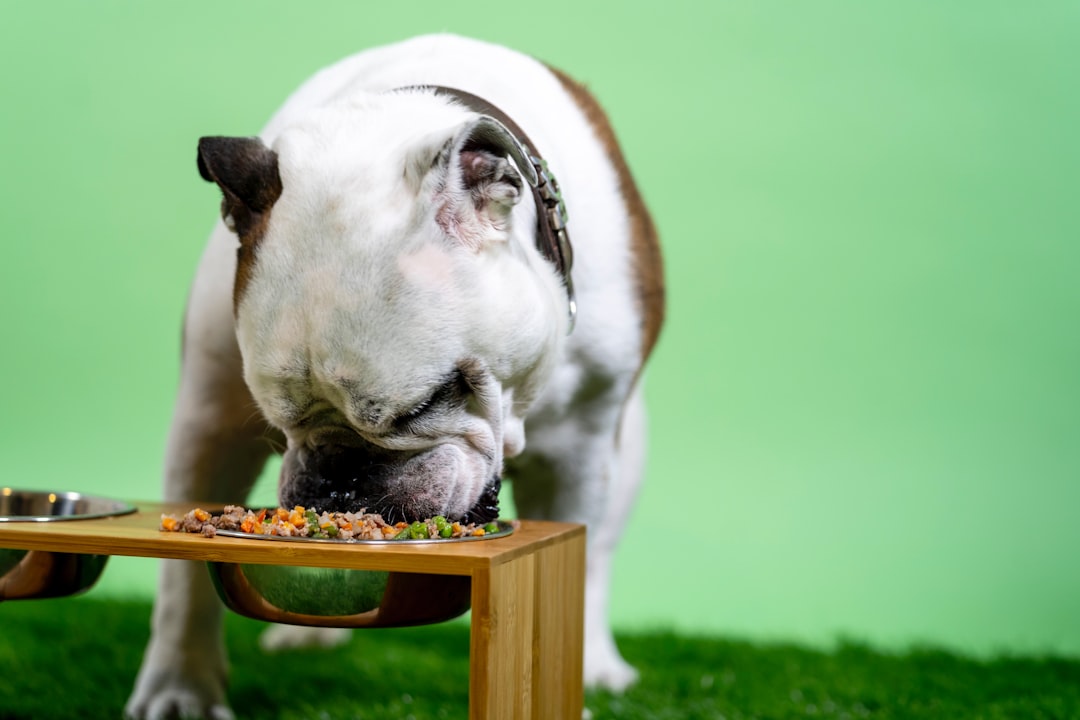
If you've typed "can you mix kibble and fresh dog food" into a search bar recently, you've almost certainly already run into two completely opposite answers — and both of them are wrong in ways that matter.
On one side: raw feeding advocates warning you that mixing kibble and fresh food creates a digestive disaster because the two foods digest at "different rates." On the other: kibble manufacturers implying that adding anything fresh to their product will disrupt a precisely calibrated nutrient balance that took scientists years to perfect. Both arguments sound authoritative. Neither holds up to scrutiny.
We've spent a significant amount of time in this space — reading the actual research, talking through the physiology, and watching what happens when real dogs make the transition to hybrid feeding. The honest answer is that mixing kibble and fresh food is not only safe for most dogs, it's one of the most practical and nutritionally sensible things you can do if a full fresh diet isn't yet in your budget or routine. What matters is how you do it — and understanding why the myths are myths helps you do it right.
This guide gives you that foundation, plus three specific hybrid feeding models with exact ratios you can start using this week.
The "Different Digestion Rates" Myth — What the Science Actually Says
This is the argument you'll hear most often from committed raw feeders: kibble requires a longer, more alkaline digestive environment, while raw meat digests quickly in an acidic stomach — and mixing the two creates a conflict that slows digestion, causes bacterial overgrowth, and leads to chronic digestive problems.
It's a coherent-sounding theory. It's also not supported by how canine digestion actually works.
A dog's stomach is not a compartmentalized system that processes foods sequentially based on their type. It's a highly acidic, motile environment — gastric pH in dogs typically ranges from 1 to 2 when actively digesting, which is acidic enough to denature most pathogens and begin protein breakdown regardless of whether the protein source is fresh chicken, rehydrated kibble, or a combination of both. According to research published through PubMed on canine gastric physiology, gastric emptying rate in dogs is governed primarily by meal volume, fat content, and particle size — not by whether the meal contains processed or unprocessed ingredients.
In other words: your dog's stomach doesn't know or care that two different food types arrived together. It responds to what's there and processes accordingly. The "different digestion rates" argument would require the stomach to treat kibble and fresh meat as chemically incompatible — which it does not.
The American Kennel Club's Canine Health Foundation and board-certified veterinary nutritionists who have weighed in on hybrid feeding consistently arrive at the same conclusion: there is no documented physiological mechanism by which mixing kibble and fresh food causes the digestive conflict raw feeding advocates describe. Individual dogs may have sensitivities to specific ingredients — but that's an ingredient issue, not a mixing issue.
We've found that dogs transitioning to hybrid feeding sometimes experience loose stools or gas during the first one to two weeks. This is almost always an adjustment response to increased moisture content and dietary novelty — not evidence that two food types are "fighting" in the digestive tract. A gradual introduction resolves it in the vast majority of cases.
The "Complete and Balanced" Argument — What Kibble Companies Get Wrong
The other myth comes from the commercial kibble side, and it's more subtle.
The argument goes like this: AAFCO-compliant kibble is formulated to meet 100% of your dog's nutritional requirements. Adding fresh food to it either dilutes those nutrients (if you reduce kibble volume) or creates an excess of certain nutrients (if you add fresh food on top of the full kibble serving). Either way, the "balance" is disrupted.
This argument contains one true element and one significant distortion.
The true element: if you add a meaningful volume of fresh food to your dog's diet without reducing kibble accordingly, you will likely overfeed. Calorie management matters. We'll come back to this in the feeding model section, because it's the one legitimate practical consideration in hybrid feeding.
The distortion: the premise that kibble's "complete and balanced" status is so precisely calibrated that any deviation causes nutritional harm. AAFCO (the Association of American Feed Control Officials) sets minimum and maximum nutrient thresholds for pet food — they do not require a single, exact formulation that can be disrupted by adding a chicken thigh. A dog eating fresh food alongside kibble is not at risk of nutrient imbalance from a moderate amount of whole food addition, any more than a human eating a nutritionally complete meal-replacement shake is harmed by also eating a banana.
The context AAFCO's guidelines don't provide — but that veterinary nutritionists at institutions like Tufts University's Cummings School of Veterinary Medicine do — is that whole food additions at reasonable proportions do not displace the core nutrient profile of the base diet. They complement it. The body absorbs what it needs and excretes the excess within normal parameters.
What this means in practice: you can safely add 10% to 50% fresh food to your dog's diet by calories without disrupting their nutritional baseline — provided you adjust total food volume to match their actual caloric needs.
The One Thing That Actually Matters: Calorie Math
Here is the legitimate concern in hybrid feeding, stated plainly: dogs gain weight when they eat more calories than they burn. It's not more complicated than that.
Where hybrid feeding goes wrong — the only place it consistently goes wrong in dogs without specific dietary restrictions — is when owners add fresh food as a topper or supplement without reducing kibble volume. The kibble portion stays the same. The fresh food adds additional calories. Over weeks and months, the dog gains weight.
This is solvable with a 10-minute calculation you do once.
How to calculate hybrid feeding portions:
-
Find your dog's daily caloric requirement. Most kibble bags provide a feeding guide in cups; most fresh food providers list calories per portion. If you're unsure, the Merck Veterinary Manual provides resting energy requirement (RER) formulas by weight: RER (kcal/day) = 70 × (body weight in kg)^0.75, then multiply by a life stage factor (1.6 for typical adult dogs).
-
Decide your ratio. The three models below use specific ratios — pick the one that matches your situation and apply it to your dog's total daily calorie target.
-
Divide the calories between fresh and kibble according to the ratio. Weigh or measure accordingly. The fresh food's caloric density will differ from kibble's — check the label.
-
Adjust every 2–3 weeks based on your dog's body condition score. You should be able to feel ribs easily without pressing, and there should be a visible waist from above. If the waist disappears, reduce total portions by 10%.
In our experience, owners who do this calculation once — even roughly — avoid the weight gain problem entirely. Those who eyeball it and add fresh food on top of unchanged kibble portions are the ones who end up at the vet a year later with a dog that has crept 15% over their healthy weight.
The One Nuance Worth Knowing: Raw Meat and Kibble Surface Area
Before the feeding models: one specific scenario where we do recommend keeping foods separate, and why.
If you're adding raw, uncooked meat to kibble — not gently cooked fresh food, but genuinely raw — there is a surface-area consideration worth understanding. Kibble's processed surface provides additional substrate for bacterial colonies to establish compared to plain meat. A study published in PLOS ONE examining bacterial load in raw pet food found that raw meat-based diets carried detectable levels of pathogens including Salmonella and Listeria in a meaningful proportion of samples — which is a separate consideration from the digestion rate argument, and a real one.
This doesn't mean raw meat and kibble can't coexist in the bowl. It means:
- Source raw meat carefully, from reputable suppliers with documented quality standards.
- Don't leave raw-and-kibble mixed meals sitting at room temperature. Feed promptly and discard uneaten food within 30 minutes.
- Households with immunocompromised members, young children, or elderly individuals should weigh this bacterial load consideration seriously.
Lightly cooked fresh food — which most commercial fresh dog food brands use — largely eliminates this concern. The cooking process reduces pathogen load while retaining significantly more nutritional value than the high-heat extrusion process used to make kibble.
Three Hybrid Feeding Models With Exact Ratios
These are the three approaches we've found work consistently for different household situations. Each one is calibrated to avoid the calorie math problem and each one is safe for the average healthy adult dog.
Model 1: The Topper Method (10–20% Fresh)
Best for: Owners starting out, dogs with sensitive stomachs, budget-conscious households.
How it works: Kibble remains the base of every meal, comprising 80–90% of daily calories. Fresh food — cooked meat, vegetables, commercial fresh food, or lightly scrambled egg — is added as a topper at 10–20% of daily calories.
What to do:
1. Calculate your dog's daily calorie target (see the RER formula above or use your kibble bag's guideline as a starting point).
2. Reduce kibble by 10–20% of total daily portion by weight or volume.
3. Replace those calories with fresh food. For commercial fresh food, use the product's calorie-per-gram figure. For home-prepared toppers, general reference: cooked chicken breast runs approximately 165 kcal per 100g; cooked sweet potato approximately 90 kcal per 100g.
4. Introduce over 7–10 days — start at 5% fresh, increase gradually to avoid digestive adjustment symptoms.
What you'll notice: Most dogs show improved stool quality, increased meal enthusiasm, and modestly better coat condition within 3–4 weeks. The topper method adds moisture to a kibble-heavy diet, which is a genuine benefit — kibble's moisture content is typically under 10%, while dogs in the wild obtain significant hydration from food.
Model 2: The 50/50 Split
Best for: Owners committed to maximizing fresh food volume without fully transitioning, dogs with good digestive tolerance.
How it works: Daily calories are divided equally between kibble and fresh food. This is sometimes called "half kibble half fresh food" feeding, and it's the approach with the most enthusiastic anecdotal support in the fresh feeding community.
What to do:
1. Calculate daily calorie target.
2. Divide exactly in half. Feed kibble at one meal and fresh food at the other — or combine at each meal at 50/50 ratio by calories (not volume — fresh food is denser in moisture and lighter in caloric density than kibble, so a 50/50 split by calories will look like more fresh food by volume).
3. Use a commercial fresh dog food for this model if you're not confident about home-prepared nutritional completeness. At 50% of the diet, fresh food is contributing meaningfully enough that its nutritional profile matters.
4. Monitor body condition every 2 weeks for the first 6 weeks.
What to watch: The 50/50 split is where transitional digestive symptoms are most common, simply because the dietary shift is larger. A 3-week gradual increase from the topper baseline (20% → 35% → 50%) is smoother than jumping directly to 50/50.
Model 3: The Alternating Meal Approach
Best for: Owners who want variety in their dog's diet, dogs who do well with dietary novelty, households where prep time is a constraint some days.
How it works: Rather than mixing within a meal, alternate between all-kibble meals and all-fresh meals. Common rotation: kibble in the morning, fresh in the evening. Or: fresh Monday/Wednesday/Friday, kibble the remaining days.
What to do:
1. Calculate daily calorie target and split between meal occasions.
2. Size each meal — kibble or fresh — to deliver its portion of the daily calorie target, not a full day's worth. A dog receiving fresh food at dinner and kibble at breakfast needs roughly 50% of their daily calories at each meal.
3. Adjust kibble and fresh portions independently based on how frequently each appears in the rotation.
What we've found with this approach: It works exceptionally well for dogs who show meal boredom on any single diet format. The variety in texture, moisture, and flavour appears to maintain meal enthusiasm more consistently than a fixed single diet. It's also the most flexible model operationally — if you run out of fresh food, the rotation simply shifts to more kibble days temporarily without any risk.
How to Transition Safely: A 14-Day Introduction Protocol
Regardless of which model you choose, this introduction schedule reduces the likelihood of transitional digestive symptoms.
Days 1–3: 90% kibble / 10% fresh. Observe stool consistency — you're looking for formed stools and no significant gas.
Days 4–7: 80% kibble / 20% fresh. If the first phase produced good results, continue. If loose stools appeared, stay at the 10% level for an additional 3–4 days.
Days 8–11: Advance to your target ratio at half the final increment. If your goal is 50/50, land at approximately 65% kibble / 35% fresh.
Days 12–14: Move to your target ratio fully.
After day 14: Monitor body condition score every 2–3 weeks. Adjust total portion if weight is trending in either direction.
The most common error we see here: owners interpret loose stools on day 2 as evidence that mixing is causing harm, and abandon the transition. Day 2 loose stools almost always reflect the adjustment to higher dietary moisture, not a problem with hybrid feeding itself. If symptoms persist past day 5 or are accompanied by vomiting or blood, consult your veterinarian — but a brief adjustment period is normal and not a signal to stop.
Frequently Asked Questions
Is it okay to mix raw and kibble in the same bowl?
For most healthy adult dogs, combining raw meat and kibble in the same bowl is not the digestive danger some advocates describe. The "different digestion rates" argument is not supported by canine gastric physiology. The legitimate consideration is bacterial load: raw meat carries a higher risk of pathogens like Salmonella than cooked fresh food. If you choose to combine raw meat with kibble, source the raw meat carefully, feed promptly, and discard any uneaten food within 30 minutes. If anyone in your household is immunocompromised, lightly cooked fresh food is a safer alternative that retains most of the nutritional benefits.
Will mixing fresh food with dry dog food throw off the nutritional balance?
Not at the proportions described in this guide. AAFCO's "complete and balanced" standard sets minimum and maximum thresholds — it doesn't require a single fixed formulation that breaks when whole food is added. At 10–50% fresh food by calories, you're complementing the kibble's nutrient base, not disrupting it. The one practical requirement: adjust total portion volume so total daily calorie intake matches your dog's actual needs. Fresh food added without reducing kibble volume is where the "imbalance" problem actually occurs — and it's a calorie problem, not a nutrient ratio problem.
What's the best kibble topper for fresh food beginners?
The easiest starting toppers are lightly cooked proteins your dog already tolerates — plain cooked chicken breast, cooked egg, or a commercial fresh dog food portioned at 10–15% of daily calories. Avoid onion, garlic, grapes, raisins, xylitol, and macadamia nuts, which are genuinely toxic to dogs regardless of how they're served. If you want a convenient option, commercial fresh dog food brands that are AAFCO-compliant provide a nutritionally documented starting point that removes the guesswork from home preparation.
How do I know if hybrid feeding dogs is working?
Four indicators to watch in the first 6–8 weeks: stool quality (formed, consistent — not dry and crumbly, not loose), coat condition (most owners notice improved shine and reduced shedding as dietary fat and moisture increase), meal enthusiasm (most dogs show heightened interest in food when fresh food enters the rotation), and body weight (stable within 2–3% of starting weight if your calorie math is right). If all four indicators are positive at week 8, your hybrid model is working.
Can puppies eat a mix of kibble and fresh food?
Puppies have higher caloric and nutritional demands than adult dogs, and their requirements for specific nutrients — calcium-to-phosphorus ratio in particular — are more sensitive during growth phases. Hybrid feeding is generally considered safe for puppies, but the fresh food component should ideally be a nutritionally complete product formulated for all life stages or specifically for growth, not a home-prepared topper of uncertain composition. If in doubt, consult a veterinary nutritionist before significantly altering a puppy's diet.
The bottom line on mixing kibble and fresh food is simpler than the loudest voices in this debate suggest: it works, it's safe for most dogs, and it's one of the most accessible ways to improve diet quality without a full fresh-feeding commitment. Get the calorie math right, introduce gradually, and choose your model based on your household's realistic capacity — not on internet arguments built on physiology that doesn't hold up to scrutiny.
Your dog's digestive system is more capable and adaptable than either camp is giving it credit for. Trust the physiology, do the math, and start with the topper model this week.
See also: how kibble and fresh food compare in nutrition and digestibility | the different types of fresh dog food | digestive upset your dog may experience when transitioning | common nutritional mistakes to avoid when changing your dog's diet